Search This Blog
Translate
Popular Posts
-
The Eagle Nebula is a young open cluster of stars in the constellation Serpens, discovered by Jean-Philippe de Cheseaux in 1745-46. Its na...
-
The Moon is familiar; it always looks the same. We know that the Earth rotates, that’s why the Sun, Moon and stars seem to move through t...
-
Saturn's rings are made of billions of pieces of ice, dust and rocks. Some of these particles are as small as a grain of salt, while ...
-
A planetary nebula, also known as the Eskimo Nebula, in the constellation Gemini, position RA 07 h 29.2 m, dec. +20◦ 55 . It is bluish,...
-
We might take it for granted, but why do stars, moons, planets or any celestial bodies constantly move around one another? What an O...
Blog Archive
-
▼
2013
(59)
-
▼
May
(17)
- Eagle nebula discovered by Jean-Philippe de Cheseaux
- What is a Supernova Remnant ?
- What is a Nebula ?
- How to become an Astronomer ? (A Guide for Student...
- How to Tell the Difference Between Planets and Sta...
- How to Choose the Right Telescope ?
- How to Calculate a Light Year ?
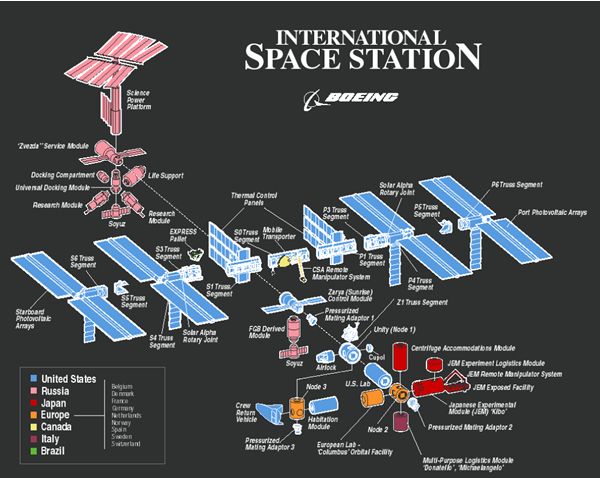
- The International Space Station: Inside and Out
- How to make an Astronomical Telescope at home ?
- Astronomy - A Self Teaching Guide - Dinah L.Moche
- Ideas and Opinions by Albert Einstein
- Introduction to Astronomy and Cosmology - Ian Mori...
- Encyclopedia of Astronomy & Astrophysics (eBook)
- What causes gravity?
- Astronomy: The Solar System and Beyond, 6 Edition ...
- Where Did The Moon Come From? (eBook)
- The Birth And Death Of The Sun (eBook)
-
▼
May
(17)

0 comments:
Post a Comment
IT'S YOUR TURN...
To respond : Drop in just anything but spam. Please don't drop comments just to add your link here. You can use basic HTML tags.
Important : If you're looking for further clarification, advice or support, please address by comment.